
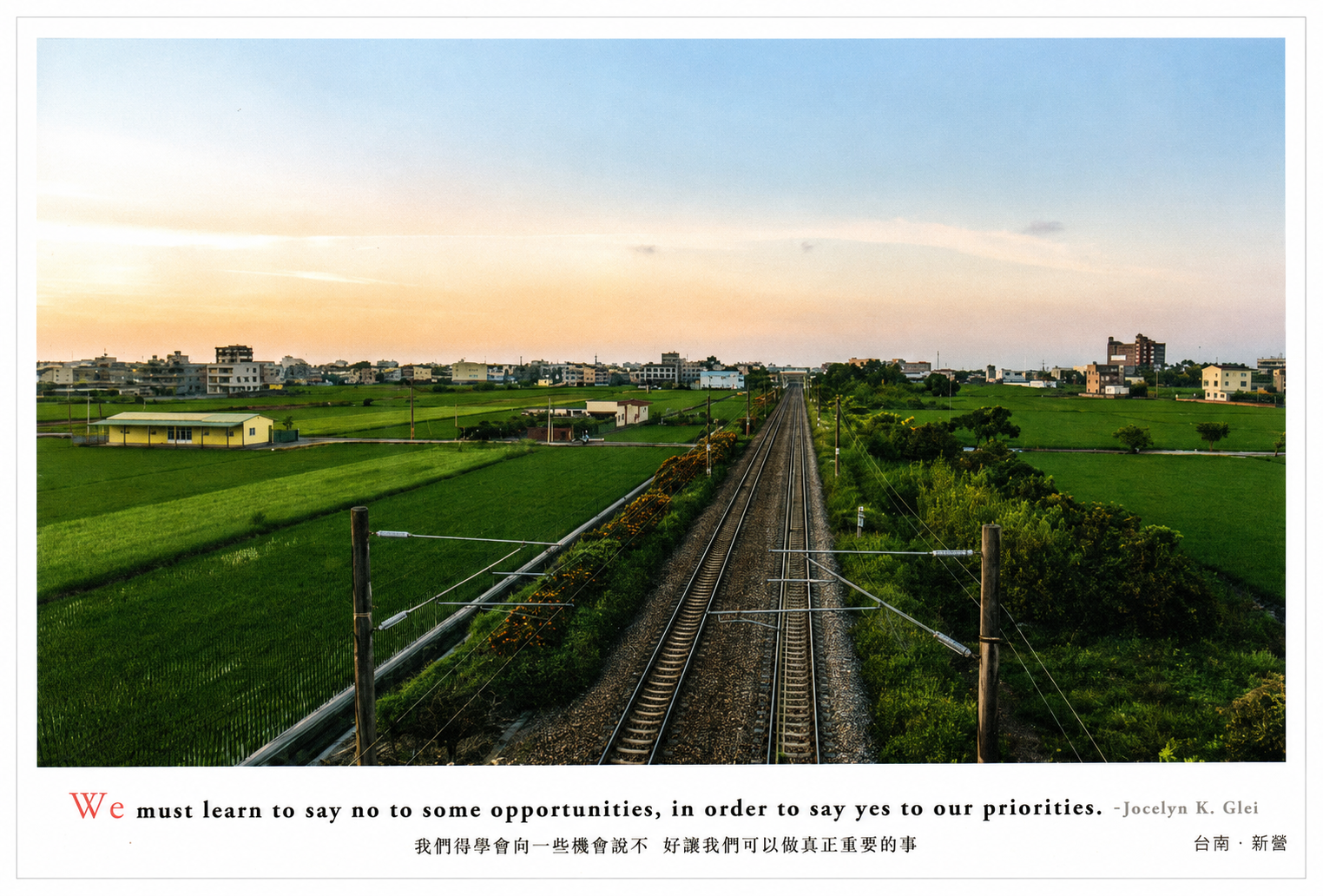







Early morning at Heathrow Airport. The first photograph I took after landing in the UK, with a quiet road, metal bollards, modern airport buildings, and a sky lit by soft sunrise colours.
Nearly five years after arriving in the UK, as I prepare for Indefinite Leave to Remain (ILR), it feels like a natural moment to pause and reflect.
Immigration has long been a charged topic in UK politics. The arguments predate me and continue to evolve. Policies shift and narratives harden. Often, complex lives are reduced to categories and qualifiers, stripped of nuance.
Four years into living in the UK, there is only one other thing I practise more regularly than my weekend swim.
Ticking boxes.
Ethnicity. Gender. Disability. Migration status.
Sometimes: Were you eligible for free school meals?
I now move through most forms without much thought, a habit that began before I arrived in job applications filled out from afar. It includes the familiar scan for the option that says this does not apply to me. And then, every so often, something slows me down.
What exactly is all this ticking meant to capture?
If who I am is the boxes I do or do not tick, where do the values I carry go?
That question did not stay personal for long. Over the past year, it resurfaced through a survey with diasporic creatives from Hong Kong who have also moved to the UK. What emerged was not just frustration, but a pattern: those with more experience were often the ones struggling to transfer their skills and sustain their careers after migrating.
These were mid-career and senior creatives, artists, producers, arts educators, and managers, whose skills did not neatly translate into UK systems. Networks were unfamiliar. Norms were implicit, rules unspoken. Prior leadership was difficult to evidence in ways recruitment processes recognised. Many experienced job downgrading, stalled progression, or drifted out of the sector altogether.
The box-ticking worked.
The translation did not.
Around the same time, at an artist network event, I met a visual artist who had arrived from Afghanistan a few years earlier. She showed me her drawings, confident and detailed, clearly the work of someone with an established practice. She wanted to offer her skills to communities here, but was uncertain how to re-establish her practice and be recognised as a professional with something to build on, rather than starting again from the margins.
Different country. Different journey.
The same obstacles.
None of this surprised me as much as it should have.
Over the past four years of working in the UK, I have supported UK-based creatives stepping into executive and leadership roles, many of them from under-represented backgrounds. They are often trusted because they bring lived experience, diverse artistic voices, and perspectives the sector says it values.
People are entrusted with leadership, but not always supported with the scaffolding needed to sustain it.
Executive leadership involves decisions far beyond creative practice: governance, financial risk, organisational strategy, people management. For many, these demands arrive suddenly, pulling time and energy away from artistic thinking, creative development and cultural vision.
The pressure accumulates. Instead of creative leadership being expanded and supported, it is often displaced by administrative and executive burden. When leaders struggle under that weight, the difficulty is framed as individual capacity rather than system design.
Seen together, the experiences of migrant creatives, diasporic practitioners, and creatives stepping into executive leadership point to the same underlying issue. A sector that is better at identifying differences than developing people, and one that struggles to recognise the depth of talent already at the table.
The boxes get ticked.
The assets stay locked.
Once the boxes are ticked, difference is often approached as risk to be managed rather than strength to be developed. Migrants are discussed in terms of pressure or competition. Diverse leaders are assessed through questions of readiness. New arrivals are measured first by what they lack rather than what they bring.
When the starting lens is mitigation rather than possibility, capability is easily overlooked.
All this is happening as the sector’s operating environment is quietly changing. Cultural organisations are increasingly expected to work relationally, navigate complexity rather than control it, and remain closely connected to the communities they serve. For anyone working in the sector, this often involves translation: between creative ambition and organisational responsibility, between funders and communities, between immediate pressures and longer-term purpose. In this context, translation becomes a core skill for navigating the sector, even if it is not always recognised as such.
This is where the limits of box-ticking become most visible. Counting difference may tell us who is in the room. It tells us far less about how people are supported once they are there, or how their skills are allowed to shape what the sector becomes.
This matters not simply as a question of fairness, but of capacity. When skills and leadership potential are not developed, the sector limits its own ability to adapt, regenerate, and grow collectively. The cultural sector is facing a well-documented retention problem. People are leaving because they are burnt out, underpaid, or unable to see a future. The ability to remain is not evenly distributed; for some, staying requires financial or structural security that others do not have. At the same time, experience and capability are being underused or sidelined, particularly when they do not arrive in familiar forms or follow established pathways.
Zoom out further, and this sits within a wider societal moment. Diverse communities are often described in terms of cost, pressure, or competition for resources. What gets lost is a fuller picture of value.
That value is economic, in the networks and exchange communities sustain. It is social, in the relationships that build cohesion. And it is innovative, in the alternative approaches, problem-solving instincts, and ways of thinking that emerge from navigating multiple systems.
I remember that first morning at Heathrow, watching the sky lighten and wondering what the future would hold. More quietly, I wondered what I was bringing with me, beyond documents and luggage: experience, judgement, ways of thinking. What would be recognised. What would not.
Strength shaped through navigating complexity.
Decision-making that translates fluently across creative, cultural, and organisational thinking.
Values grounded in adaptability, collective awareness, and long-term thinking.
These are not decorative extras. They are practical assets, ones that can strengthen individuals, communities, and the sector as a whole, if the conditions exist for them to be recognised and developed within our systems.
So perhaps the real question is not whether we are good at counting people, but whether we are willing to invest in them once they are counted.
If the box-ticking exercise is where inclusion begins, it cannot be where it ends. Otherwise, we risk building systems that look diverse on paper while quietly limiting the agency, contribution, and growth of the very people they were meant to include.
And that, nearly five years in, is the pause that keeps returning. Right in the middle of the next form.
