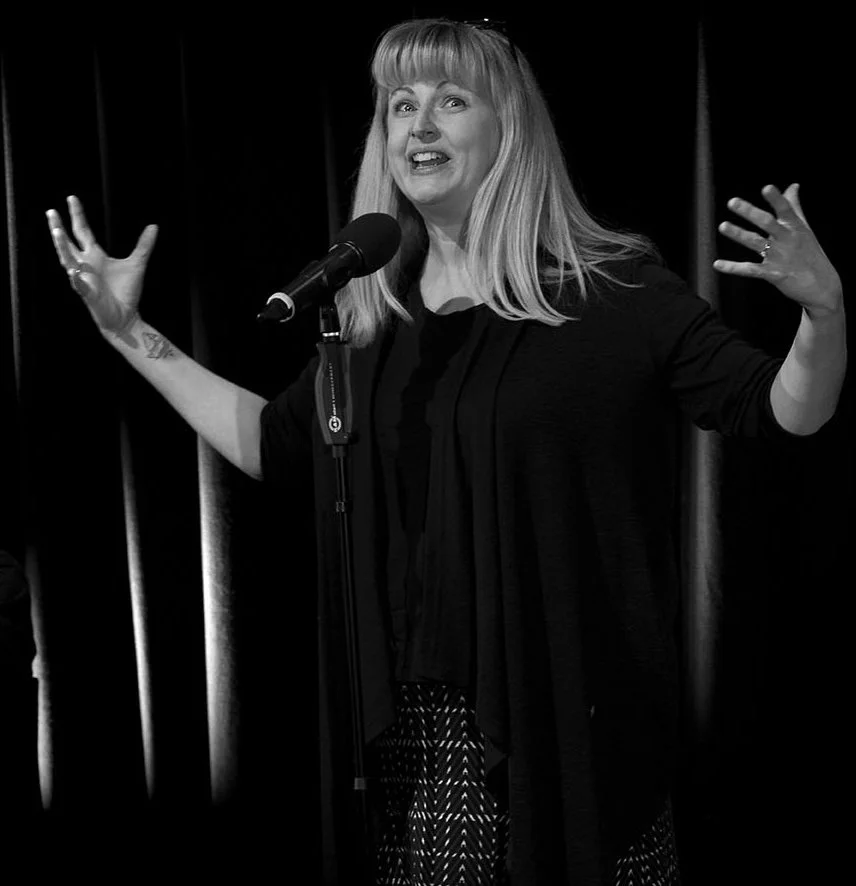
I have been attending and performing at poetry nights around Manchester since 2014. Back then, I lived in Yorkshire and was steeped in anxious nerves and looming imposter syndrome. Yet each time I hopped the Transpennine line to attend nights like Evidently or Word War Slams or Speak, I met familiar faces, felt the buzz of poetic connection, and began to ease into a sense of belonging. Since then, I’ve moved across the Pennines to Prestich, won poetry slams, toured spoken word shows, published books and married a poet.
During the pandemic, many of these nights dissolved into the ether of lockdown, or tried valiantly to continue online. As we came out of the pandemic, I felt the ebb of spoken word events in Manchester transform into a huge flow of poetry nights popping up all over the city. Even though post-pandemic time is turning into years, we are still trying to satiate our appetites for in-person creativity and Manchester’s long-vibrant poetry scene is once again flourishing.
I attempted to quantify the current scene in Manchester by making a list of regular nights, and I stopped at around thirty. That’s over two dozen regular poetry events in the Greater Manchester Area GMA. By the time I have finished writing this piece, another few will probably have started!
As with any cultural experience, people who take part in spoken word events are not a monolith. There are as many reasons for wanting to participate in poetry events in Manchester as there are people who attend them. Nevertheless, in my recent podcast interview with TS Eliot-prize winning poet Joelle Taylor, she extolled poetry open mics as the “last free art,” noting that they are places where belonging inevitably happens, and that they are spaces that should be preserved:
“The open mic should have a blue plaque on it because it’s extraordinary.”
The majority of spoken word nights in Manchester are free to attend, or run as Pay-As-You-Feel events, or have nominal ticket prices – usually under £10. Money collected often goes to a feature guest performer, or organisers might have funding to offer higher fees. Guest poets may have merch to sell – books, badges, postcards – in an effort to boost income. Venues – also often free to hire – can range from rough-and-ready pub back rooms to snazzy theatre studios. There are anti-establishment joys in this DIY approach, but generally speaking these are not lucrative endeavours for poets.
So why do it? What draws someone to perform as part of the burgeoning scene in Manchester?
Is it too simplistic to say vibes?
I listened at Hinterland Poets, a free monthly event in the vegan and alcohol-free bar of the same name located under Manchester’s Buddhist Centre. Every seat in the plant-bedecked performance space was filled, so I perched on a window ledge at the back of the room. I heard first time readers nervously ask host Dominic Berry for a spot on the open mic, and saw upturned corners of mouths as their names were joyously called to the stage. I heard poets share on the break about how they admired a poem or resonated with someone’s words. Feature guest Skye Lily spoke about their upcoming show at Buxton Fringe, and received enthusiastic cheers for the excerpts they shared on the night. I heard from poets while we waited in the loo queue about the comfort and welcome they felt in the space.
I listened at Other People’s Poetry, a Pay-As-You-Feel event at Seesaw, a creative hub in the heart of Manchester. We sat in a circle of comfortable chairs arranged on exposed hardwood floors within the transformed warehouse space. Guest poets each read four poems by other poets, and one of their own. Toreh O’Garro shared that this was the first time they had read their work aloud in nearly a decade. Sally Barrett read a found poem that she created from words heard while listening on a bench for 43 minutes in Manchester Victoria station. I heard host Joe Conway shout out other writers in the room for pamphlets being published. I heard fellow audience members say how poetry is like “the condensation of language” and that the event was a comfortable space “to be quiet together.”
I listened at Pull Up, Speak and Sing, a free monthly event at Pull Up Bar and Cafe located on Manchester’s busy Swan Street. I listened as attendees chatted over delicious Caribbean food while waiting for the performances to start. I listened to Pip, a pal who is new to poetry via years of playing music, and who is trekking to open mics in all corners of the North West. I listened to Sharon, the cafe’s owner and matriarch of the night, as she greeted everyone who came in, and shushed anyone who talked during a performance. I listened to a curated lineup of amazing open mic poets, and heard audiences clamour for their instagram handles on the break.
Each event was jam-packed with people. The atmospheres were shaped by the quirkiness of the spaces, the enthusiasm of everyone attending, and the uniquely welcoming space-holding by each host. The magic in each night was something intangible in the air – aka vibes, described in a recent article in The Independent, as the“relationship between things – how people, sounds and materials work together to create a shared feeling.”
The article goes on to posit that vibes are “one way we stay alert to what connects us as human beings” – which was extraordinarily on display at the events I attended.
Though they may be soul-nourishing, one cannot survive on vibes alone. How then can we extend these vibe-filled, community-building experiences of poetry events in Manchester (and beyond) to be meaningful and sustainable parts of poets’ livelihoods?
I recently hosted a Q&A panel with writers from creative writing charity, First Story. Questions from the secondary school students in attendance included where ideas are generated, and tips for dealing with writer’s block, but the majority of questions were about how to start and sustain creative writing as a career. Panelist Dean Atta – an award-winning poet – lauded open mic nights as his gateway into the industry. He noted that open mic poetry nights brought him into community with other writers and helped him to build his confidence and networks, as well as helping him to hone his craft.
If we combine Joelle Taylor’s insistence that open mics be preserved with Dean Atta’s assertion that poetry events can be vital entry points for budding poetry professionals, then maybe the vibes in Manchester’s burgeoning scene are important components of the hive as a whole. (Forgive the bee metaphor – it is Manchester after all!). With growing numbers of people buzzing across regular nights, there is a community cross-pollination happening that will help the scene to sustain and grow. Poets may never earn a living wage from only performing at poetry events, but with a multitude of nights in Manchester, there are many meaningful opportunities for poets to grow in confidence, sharpen their skills and deepen connections - all in the company of good vibes.